
Abnormal weight gain is referred to as an unexpected or excessive rise in body weight from the normal life cycle, aging process, or temporary dietary changes. Since the number of obese and overweight persons has more than doubled worldwide since 1990, studies have shown that the issue of abnormal weight gain has become more widespread in the public. According to the World Health Organisation (WHO) report, approximately 900 million people will become obese in 2022 and over 2.5 billion persons have been classified as overweight.
Almost 1 billion people worldwide are affected by obesity, including 879 million adults and an estimated 159 million adolescents and children according to a 2024 report produced by the NCD Risk Factor Collaboration. Approximately three billion people are overweight or obese. According to information provided by the World Obesity Federation, weight factors have therefore been shown to be detrimental for public health.
Abnormal weight gain can result from hormonal imbalances, medication side effects, sedentary lifestyle, metabolic disorders, or chronic illnesses. Accurate documentation is crucial for a medical billing company in the USA to ensure correct compliance, coding, and reimbursement.
ICD-10 Code for Abnormal Weight Gain R63.5
Description of R63.5
The ICD-10-CM code R63.5 is used to report abnormal weight gain. It may describe unexplained or excessive weight gain that cannot be readily attributed to normal physiological growth, aging, pregnancy, or temporary lifestyle changes.
The code falls under the R63 category, which covers symptoms and signs related to food and fluid intake.
- It indicates abnormal weight gain.
- It is used when the underlying cause is unclear or under evaluation.
- It may be assigned during initial assessments before a definitive diagnosis is established.
- It may be accompanied by laboratory tests or imaging to investigate potential underlying causes.
- It is distinct from obesity codes in the E66 category, which identify a documented obesity diagnosis.
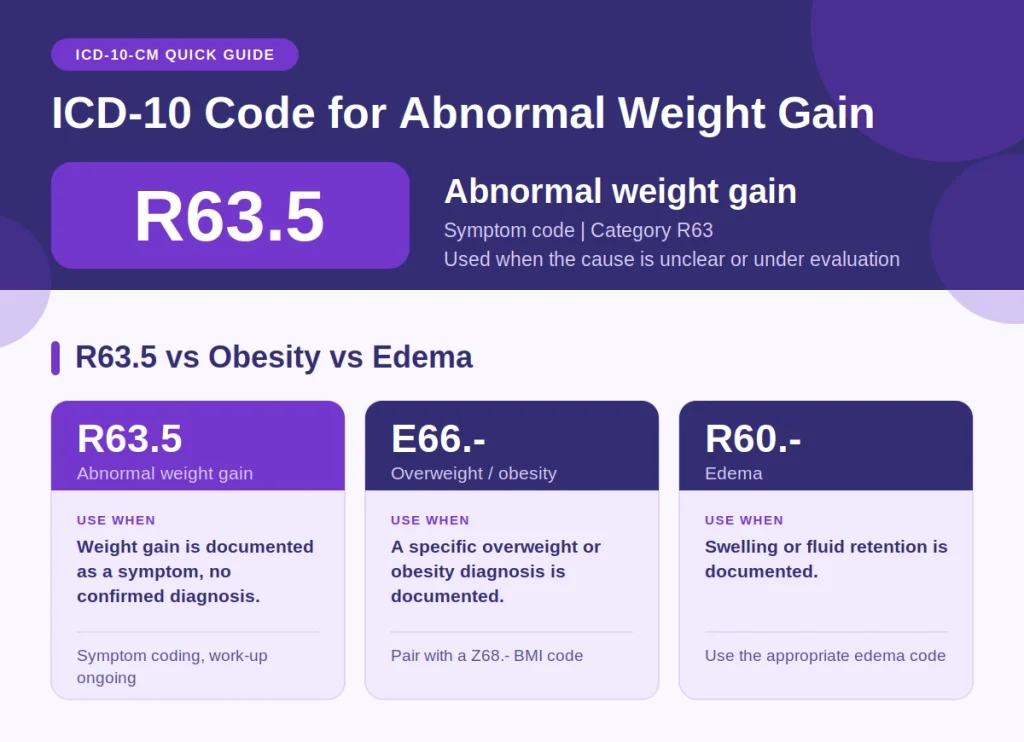
R63.5 vs. Obesity vs. Edema: ICD-10-CM Comparison
| ICD-10-CM Code | Condition | Use When |
|---|---|---|
| R63.5 | Abnormal weight gain | Weight gain is documented as a symptom without a confirmed underlying diagnosis. |
| E66 | Overweight/obesity | A specific overweight or obesity diagnosis is documented. |
| R60 | Edema | Swelling or fluid retention is documented and requires the appropriate edema code. |
Key Differences
- R63.5 — Abnormal weight gain: Used when the patient has abnormal weight gain that may require further investigation.
- E66 — Obesity: Used when the provider documents a specific obesity diagnosis.
- R60 — Edema: Used when swelling due to fluid accumulation is documented.
Coding Tip: Select the code that best reflects the provider’s documentation. Weight gain alone does not establish obesity or edema. The appropriate code depends on the documented condition and applicable ICD-10-CM coding guidelines.
When Providers Use Weight Gain ICD-10 Codes
The weight gain ICD-10 codes are preferred by medical billing companies or practitioners when recording notable increases in weight that need examination and treatment. The specific code R63.5 is highly relevant in a first appointment or when the patient’s weight gain is due to a different condition or treatment. You can further explore right shoulder pain ICD-10 Code M25.511 for better understanding of codes for body pains.
- Inexplicable or sudden weight increase for a short time.
- Weight gain due to medicines such as antidepressants and steroids.
- Assumed hormonal imbalance such as thyroid, cortisol and insulin resistance.
- Swelling, oedema, or fluid retention have been excluded.
- Diagnosis process preceding the assignment of E66 signifies the obesity codes.
How Abnormal Weight Gain Fluctuates from Normal Weight Changes
Normal differences in weight exhibit a gradual rate associated with normal lifestyle changes, whereas an abnormal increase in weight is disproportionate, sudden, or medically problematic. The ICD-10 coding system allows a possible symptom to be differentiated from a confirmed diagnosis for obesity or metabolic disorders which is mostly used to outsource medical coding services in the USA.
- Normal weight loss or maintenance such as little and slow.
- Abnormal weight gain R63.5 is rapid and inexplicable.
- Not automatically classified as overweight or obese
- May precede diagnoses such as E66.09 for Obesity due to excess calories.
- Commonly coded together with other findings from a similar inquiry such as Z68.
ICD-10 Codes for Weight Gain and Poor Weight Gain
Weight Gain ICD-10 Codes: Abnormal Weight Gain vs Poor Weight Gain
Because abnormal weight gain and poor weight gain represent opposite clinical issues, abnormal weight gain and poor weight gain are coded differently in ICD-10. Abnormal weight gain, in particular, represents the unwarranted weight increase in the body, as opposed to poor weight gain, which represents insufficient weight gain.
This, in fact, is measured in relation to the lack of weight gain observed in children, the elderly, and those who may be chronically ill. Proper identification of the weight gain code in ICD-10 allows for the appropriate documentation of the clinical picture. You can better understand lower back pain ICD-10 Code also for overall pain codes used in medical coding.
- The code R63.5 is an abnormal weight gain with excessive or unexplained increase in weight.
- The ICD-10 code R62.51 demonstrates failure to thrive often linked to poor weight gain.
- The code R63.6 is underweight when low weight goes together with poor gain.
- Poor weight improvement may be metabolic, nutritional, or related to disease.
- Correct distinction prevents miscoding obesity or undernutrition.
Pro Tip: Always match the ICD-10 code to the weight trend and clinical context. Use R63.5 code for unexplained or excessive weight gain. The code R62.51 or R63.6 for poor or insufficient weight gain. Accurate distinction assists to prevent miscoding obesity, failure to thrive, or undernutrition and supports proper treatment and reimbursement.
Poor Weight Gain ICD-10 Codes and Related Classifications
Poor weight gain codes are considered under this category. These codes are used if a patient shows signs of not gaining weight as they should, regardless of whether they are eating enough and growing normally. These are significant symptoms that may indicate whether a patient is following a normal diet.
The code R62.51 is a failure to thrive (child) such as the most common poor weight gain code. The R63.6 demonstrates the underweight. The code E46 is an unspecified protein-calorie malnutrition. The code R63. denote anorexia such as loss of appetite contributing to poor weight gain. The codes Z68.- BMI are used to support low body weight documentation.
Weight Gain ICD-10 Codes: Documentation Tips for Accurate Coding
Accurate coding is the backbone for the best Revenue Cycle Management services in USA. Adequate documentation becomes necessary in order to choose weight gain ICD-10 codes or poor weight gain ICD-10 codes, which need to be documented by various players in order to provide a clearer explanation to the insurer regarding why a specific ICD-10 code has been used.
Need Help With ICD-10 Coding and Claim Denials?
Getting denials on this code? Talk to a billing specialist for help with ICD-10 code selection, documentation, and claim submission. The right billing support can help identify coding issues that may lead to delays or denied reimbursement.
- Specify whether weight change is abnormal gain or poor gain.
- Document timeframe such as sudden, gradual and progressive.
- Inform yourself of any contributory circumstances, including nutrition, illness, hormones, and drugs.
- Include BMI codes such as Z68. when applicable.
- Avoid assigning obesity codes (E66.-) unless and until diagnostic criteria are met.
Medical Necessity and Payer Notes
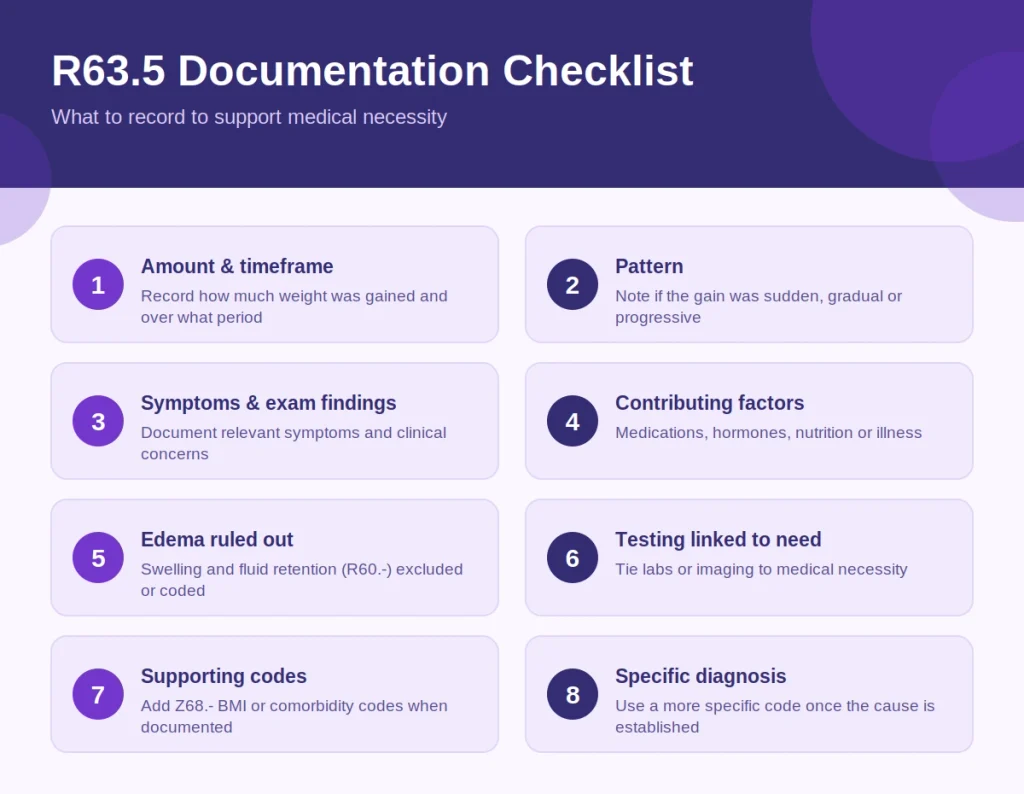
When reporting R63.5, documentation should explain why the abnormal weight gain requires clinical evaluation or management. Payers may review the medical record to determine whether the diagnosis supports the services billed.
- Document the amount, timeframe, and pattern of weight gain.
- Record relevant symptoms, examination findings, and clinical concerns.
- Link diagnostic testing to the documented medical necessity when applicable.
- Use a more specific diagnosis when the underlying cause is established.
- Report supporting BMI or comorbidity codes when appropriate and supported by documentation.
- Ensure the diagnosis code is consistent with the services and treatment documented in the medical record.
Clear documentation helps support medical necessity, accurate claim processing, and appropriate reimbursement.
ICD-10 Codes for Overweight, Obesity, and Morbid Obesity
The classification among the three applies in the context of BMI and overall health risk. Overweight normally includes individuals with a BMI ranging from 25.0 – 29.9, whereas obesity involves any individual who has reached a BMI of at least 30.0. Obesity is undeniably associated with a body mass index of at least 30.0 and leads to a greater chance of chronic conditions, such as heart problems, diabetes and joint issues.
Morbid obesity, also clinically termed as severe obesity, is literally much more hazardous and regularly applies to individuals who possess a BMI of 40.0 or above or 35.0 or above with difficulties from obesity. Correct categorization is an important application since approaches to treatment, insurance coverage, and long-term health consequences vary dramatically across categories.
The coding of ICD-10 captures the variations. E66.3 is ICD-10 code for overweight used for the situation when a person is overweight, and the use of E66.9 is ideal when the ICD-10 code for obesity is unspecified, which is a common approach when using the ICD-10 coding system. The coding of ICD-10 also includes more precise codes such as E66.09 when the main underlying issue is the intake of excess calories in the case of obese patients.
The use of E66.01, which is known as the ICD-10 code for morbid obesity in relation to excess calories, becomes ideal when providers consider the use of Z68.- codes for the calculation of BMIs in the event of morbid obesity.
Pro Tip: Always pair E66. obesity or overweight codes with the appropriate Z68.- BMI code to help severity, reimbursement and medical necessity. Accurate BMI-based categorization confirms correct treatment planning, decreases claim denials, and strengthens documentation for obesity-related care.
ICD-10 Code for Underweight R63.6 and Poor Nutritional Status
Underweight turns into a medical diagnosis if there is an individual’s body weight that is lower than the supposedly normal body weight, which is usually classified as having a BMI of less than 18.5. The code for underweight, as per ICD-10 coding rules, is R63.6, which can usually be applied to individuals whose body weights are lower due to poor nutrition or lower food intake despite having normal body types.
Otherwise not-too-healthy conditions such as fatigue, immunodeficiency, poor wound healing, or vitamin deficiencies might potentially result from individuals who can possibly have significant underweight conditions.
- R63.6 is an underweight code.
- This frequently corresponds to eating disorders, chronic sickness, weak appetite, and malabsorption.
- May be interconnected to aging, cancer, gastrointestinal disease, or mental health situations.
- Th codes Z68.- BMI are used to support low body weight documentation
- Consider E46 as unspecified protein-calorie malnutrition if nutritional absence is present.
- Document severity, duration, and contributing factors for accurate coding.
ICD-10 Code for Weight Loss and Unexplained Weight Loss
The ICD-10 codes vary depending on the nature of the weight loss because weight loss could be both intentional and unintentional. Whereas intentional weight loss, either through exercise, diet, or formal weight loss programs, rarely gets coded unless in the context of a medical management. On the other hand, unintentional weight loss can also be of major importance and can be linked with many clinical conditions, such as metabolic disorders, gastrointestinal disorders, endocrine disorders, infections, and neoplastic disorders. The foremost code of coding in relation with unintentional weight loss is “R63.4: Abnormal weight loss, especially in elderly or chronically diseased persons, showing rapid, inexplicable, significant weight loss.
Some additional codes in the ICD-10 system can record similar symptoms or complications of weight loss. These include R63.0, which is applicable to anorexia or loss of appetite; R63.6, which is applicable to underweight conditions due to low body weight; E46, which is applicable to individuals who have protein-calorie malnutrition, though this is unspecified; and Z68.-, which can be applicable in recording changes in body mass indexes.
Do You Know? Approximately over 22 million US adults have severe obesity, while over 100 million adults in the US have obesity, as stated by the US Center for Disease Control and Prevention (CDC). The prevalence of obesity in the US increased from 30.5% to almost 40% between 1999-2000 and 2017 to 2020, while the prevalence of severe obesity increased from 4.7% to 9.2%.
ICD-10 Codes for Loss of Appetite
Anorexia or loss of appetite can also affect health in a serious way since it leads to a reduction in calorie intake resulting in malnutrition or unintentional weight loss. R63.0 Anorexia is the major code for loss of appetite where the appetite loss observed is of a nature and severity that necessitates observation or treatment. Moreover, in most cases of loss of appetite observed in patients, R63.4 Weight loss, abnormal and R63.6 underweight are employed in tandem in order to code the patient’s appetite loss, mainly for elderly people or those with some form of medical ailment.
Common medical causes of loss of appetite which include:
- Infections, ulcers, and acid reflux of the digestive system indicate problems with this bodily system.
- Thyroid and adrenal diseases, among others, relate to endocrine problems that influence the metabolism of the body.
- Mental health problems such as depression, anxiety, and other mental conditions.
- Inflammation caused due to a chronic ailment like cancer or chronic inflammatory conditions.
- Side effects from prescriptions containing antibacterial drugs, chemotherapy drugs, opioids, or other medications.
- As appetite loss may also affect weight or lead to variations during the selection of therapies, the same ought to be incorporated in the medical records explicitly.
ICD-10 Code for Weight Loss Medication Management
Pharmacological weight management is considered when there is a lack of response to lifestyle modifications and the patient has marked obesity and or or comorbidities. For coding in ICD-10, Z79.899 is assigned to denote the use of current drug therapy for the management of weight loss and is commonly combined with the classification for obesity (E66.-). If the patient’s body mass index (BMI) is ≥30, they are considered to have qualified for pharmaceutical intervention, when pharmaceutical intervention is required. Otherwise, pharmacological treatment would continue to be necessary for patients with BMI ≥27 and associated conditions such as type 2 diabetes, hypertension, and sleep breathing disorders.
The use of supporting codes is important in acknowledging the condition of the patient and their treatment plan. The provider is advised to use E66.01 for Morbid Obesity, when applicable, Z68.- for Body Mass Index in estimating the severity of the condition, and R63.5 for any trend in weight that is being closely monitored. The condition history of the patient ought to document any co-morbidities, pre-existence of lifestyle modifications, date of drug initiation, dosage regimen, and response rates of compliance.
Why Accurate ICD-10 Coding for Weight Changes Matters
The assignment of correct ICD-10 codes for changes related to patients’ weights is significant for both healthcare services as well as for billing. This ensures that healthcare institutions offer their patients proper records of their existing health conditions, as this is one of the most crucial factors for taking care of such patients. Insurers require appropriate coding of patient data, such as code R63.5 are for excessive or unexplained weight gain, code R63.4 are for weight loss, and code E66 is for obesity and for patient services like weight management treatment and nutritional counseling to be accepted and guarantee a smooth billing and adjudication process.
- Support a positive insurance claim adjudication by clearly indicating medical necessity.
- Guidelines individualized treatment plans based on weight trends and underlying conditions.
- Reduces errors that happen during billing, audits, and denials of claims.
- Ensures that all coding guidelines and regulations are followed.
- It can also support tracking patient outcomes over a long period and the effectiveness of interventions.
Pro Tip: Always link weight-change ICD-10 codes such as R63.4, R63.5, and E66. with supporting documentation that include symptoms, BMI, comorbidities, and treatment plans. It elevates claim approval rates, strengthens medical necessity, and provides compliant, ready for auditing.
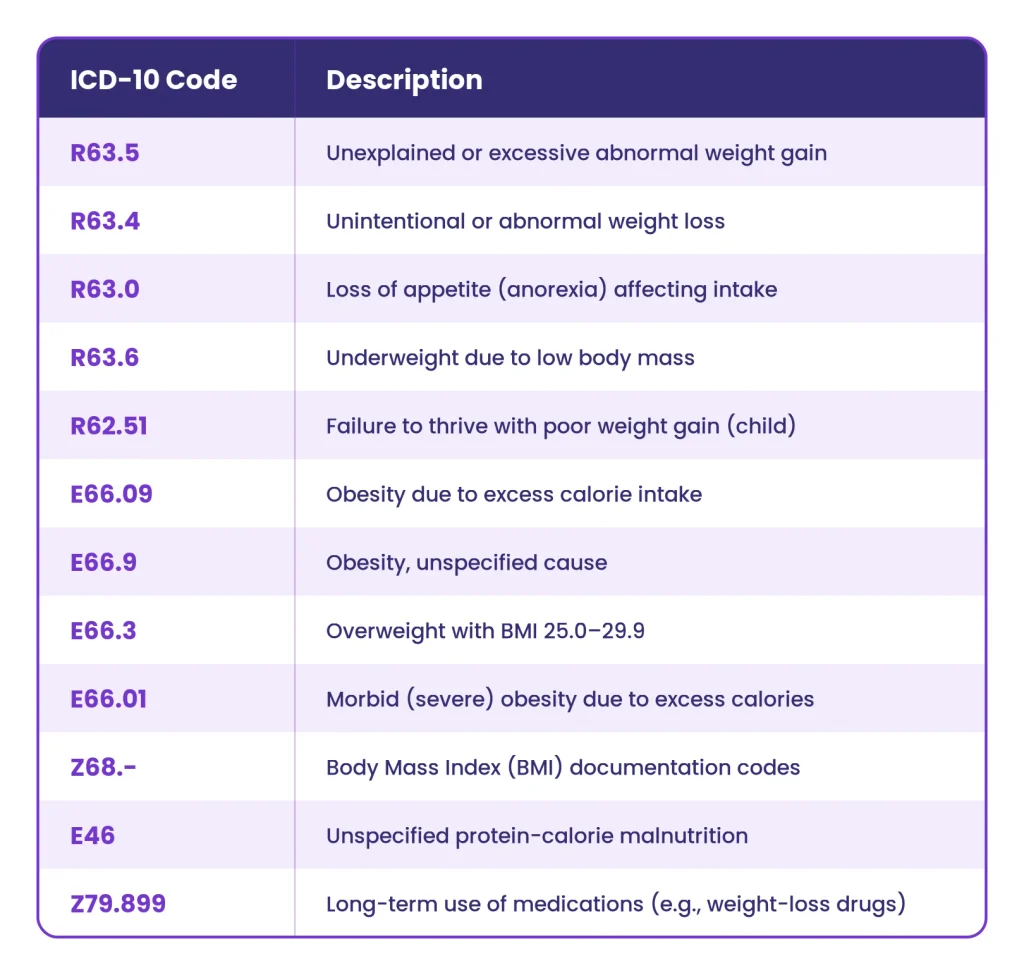
Key ICD-10 Codes for Weight Changes
When to See a Healthcare Provider for Weight Changes
Patients should be taken to the hospital when there are abrupt changes in weight, either unexplained or due to its impact on health in general. Notably, failure to gain weight, sudden weight gain or failure to lose weight may be an indicator of some medical conditions in the patient’s body that should be addressed before complications arise from obesity, malnutrition, or metabolic problems.
- Be careful of unintentional changes in weight of 5% or more in 6-12 months for both losses and gains.
- Check for signs of reduced fatigue, appetite, swelling, and changes in bowel habits.
- Early diagnosis can lead to improved management in endocrine disease, obesity,and malnutrition.
- It can assist health providers in creating tailored diets and exercise regimens according to your health condition.
- Medical evaluation allows for the safe administration of weight loss medications or therapies.
- It helps in regular monitoring of weight and helps in the maintenance of healthy weight and prevention of long-term complications.
How iSolve Support ICD-10 Code for Abnormal Weight Gain R63.5
iSolve RCM supports accurate and compliant use of the ICD-10 code for abnormal weight gain (R63.5) by helping providers translate clinical findings into clear, billable documentation. Our team ensures proper code selection, linkage to supporting diagnoses such as obesity or metabolic conditions, and correct use of BMI and long-term therapy codes when applicable. By improving documentation accuracy, reducing coding errors, and minimizing claim denials, iSolve RCM helps healthcare practices capture appropriate reimbursement while maintaining compliance and supporting better patient care for weight-related conditions.
FAQs
What is the ICD-10 code for abnormal weight gain?
R63.5 is the coding in ICD-10-CM that relates to abnormal weight gain. This applies to the unusual increase in weight in the body that may not be credited to any known causes. The medical practitioner can use this code during the evaluation process of the patient.
Which ICD-10 code is used for unexplained weight loss?
ICD-10-CM’s code for unintentional and unknown causes of weight loss is R63.4. The practice of this code is in situations when the individual experiences weight loss in conditions where the weight loss is unintended yet no cause can be determined.
What ICD-10 code is used for obesity due to excess calories?
Code E66.09 in ICD-10-CM stands for other Obesity due to Additional Calories. This code may be applied in cases where a patient suffers from obesity due to excess calories. Other codes under the category of Z68 may also be used when required.
How is underweight coded in ICD-10?
Code for underweight is R63.6 in the ICD-10-CM coding system. This code will be allocated if the patient is designated as underweight or has remarkably low body weight. Under certain circumstances, it is possible that Z68.- BMI codes can be used in conjunction with this code.
Which ICD-10 code is used for loss of appetite?
Lack of appetite is often classified under R63.0, which signifies anorexia according to ICD-10-CM. This classification is employed to indicate the decreased appetite or decrease in appetite. It is used in cases where the lack of appetite is a clinical manifestation but the reason behind it has yet to be determined.