

Collection from patients is becoming increasingly difficult as patients are having to pay a larger percentage of healthcare costs themselves. In the United States, patients account for about 30% of healthcare provider revenues, while high-deductible health care policies have resulted in higher patient out-of-pocket costs. Providers, therefore, are experiencing an increase in patient collections accounts receivable as well as late payments.
Successful revenue cycle management is not just about successful collection methods but it also includes ways to make patients satisfied financially. It has been found that patient satisfaction increases if there is transparency in their bills and flexible payment options are available to them. Medical billing agencies assist hospitals and clinics in adopting a successful billing process and also in collecting payments efficiently from the patients. In this blog, we will be discussing how to adopt billing techniques and revenue cycle management for successful collections.
Why Patient Collections Matter More Than Ever
Collections from patients have now assumed a very important financial focus since Americans are paying for their medical expenses out of pocket via the means of deductibles, copayments, and coinsurance payments. The Kaiser Family Foundation (KFF) reports that American families now owe no less than $220 billion in medical debts, and there are 14 million adults who owe over $1,000 in medical debts.
When it comes to health care facilities, non-payments affect the organization’s cash flow, make its patient AR higher, and cause expenses on collections. Yet, excessive efforts to get payments from patients may ruin trust. According to research, patients are much more willing to make payments if a facility offers transparent prices, proper explanation of the billings, and convenient ways to pay for services.
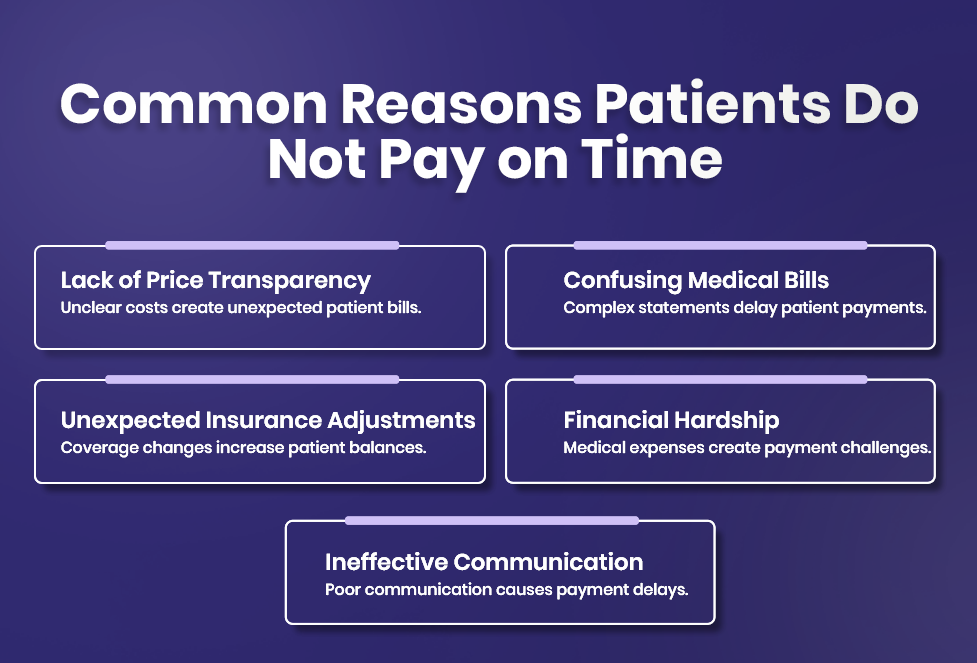
Common Reasons Patients Do Not Pay on Time
The delay in payments made by patients is usually caused by the complications associated with the billing process and not by any unwillingness to pay. Having identified the real reasons behind the problem, healthcare organizations can streamline the collection process and decrease AR.
Lack of Price Transparency
Most patients start their medical care not knowing what their final bill will be. According to the KFF survey in 2024, almost half of American adults struggle to pay their healthcare expenses, which results in nonpayment of their bills when patients do not expect it. It would help if you had an idea of the expenses beforehand.
Confusing Medical Bills
Bills issued from doctors’ offices tend to be written using terms that are unfamiliar and may also consist of insurance codes and several charges that people have difficulty comprehending. As per CFPB, such confusion in understanding the bill forms one of the primary reasons why payment is delayed and medical disputes arise.
Unexpected Insurance Adjustments
Denial of claims, increase in deductibles, and coverage restrictions often result in patients having larger bills than anticipated. Patients often assume that the insurance company will pay for the entire procedure until they receive the final EOB. It is critical to make sure the patient is eligible for insurance coverage and knows how much the procedure will cost.
Financial Hardship
Patients who wish to make payment can still encounter financial difficulties because of the rising cost of living and the presence of other medical bills. According to KFF, many Americans have medical debts even with health insurance. The use of flexible payment options, financial aid programs, and early financial counseling are helpful in this regard.
Ineffective Communication
Ineffective communication during the billing process will most definitely lead to late payments or non-payment. Patients who do not receive their bills on time, fail to understand the terms for payment, or are not reminded about the bill, find it hard to pay the bills. Communication through various modes like e-mails and text messages makes it easier for patients to pay.
Expert Insight: Reduce payment issues in advance by resolving any obstacles that would inhibit proper patient payments. Estimate costs effectively, keep billings simple, maintain communication, and offer flexible payment methods to ensure patients comprehend their financial obligations.
Build a Patient-Friendly Billing Process from the Start
Billing that is patient-friendly begins right from the onset. The entire cycle will be informed by financial education from scheduling to payment to make everything more understandable. In such a case, expectations can be set and the medical practitioner will be able to avoid problems associated with billing. Outsource medical billing services will help even further as this will ensure effective handling of billing procedures and proper communication among others.
Share Cost Estimates
Provision of proper cost estimates before the commencement of the treatment will enable the patient to comprehend his/her responsibilities as far as financing is concerned. Under the No Surprises Act, many providers are obliged to provide a good faith estimate to uninsured and self-pay patients to foster transparency in prices.
Clarify Insurance Coverage
Patients do not always know what is covered through their insurance. Explaining the patient’s eligibility for certain insurance services and understanding deductible, copayment, coinsurance, and limitations can help the patient be informed about the services to be provided. This will help avoid any surprises during billing and possible delays in payments.
Set Payment Expectations
Discussions about finance must occur during the booking process rather than after the patient has already received his or her care. Letting the patient know what the copayment is, how much he or she still owes, what forms of payment are acceptable, and payment plan options sets appropriate expectations.
Simplify Financial Policies
Financial policies that are too complicated will make patients hesitate in settling their bills. Use simple language when explaining the payment deadlines, billing process, refund policy, financing opportunities, and what happens in case the patient pays late. Policies that are easy to understand foster trust and a good relationship with the patients.
Improve Front Desk Collections Without Creating Friction
The front desk has an important function in effective patient collection. All the interactions contribute to the patient’s financial experience. If the organization is prepared, communicates well, and treats the patient with respect, then the patient’s bill will be collected effectively without compromising patient satisfaction. Adherence to front desk collections best practices assists healthcare organizations in training their staff, enhancing payment management services, and providing an easier financial experience for patients from the onset of their visit.
Train Front Desk
The reception staff members should be trained on issues regarding the payment policy, insurance knowledge, and communication skills. The receptionists who feel confident to talk about patient finances will reduce the misunderstanding that might arise during payment discussions. Training will also help receptionists to deal with such matters professionally.
Verify Insurance Early
The verification of the insurance information prior to appointment scheduling is crucial for spotting coverage problems, deductible amounts, and co-payments that may apply to patients ahead of time. Proactive verification of eligibility is one of the ways that can help avoid claim rejections and other errors in billing according to HFMA.
Collect Payments Upfront
One of the best ways to collect from patients is to ask for any copays or outstanding balances due at check-in. Doing so cuts down on patient account receivable and also reduces costs associated with collecting payments from patients. Providing different forms of payment, such as credit cards and mobile payments, increases convenience.
Communicate With Empathy
The patients will respond positively to the matter of payments if it is done in a polite and empathic manner. The personnel have to make sure that the patients understand how much is owed and then discuss payment options in an empathic manner. This will help in developing trust and solve the problem.
Offer Flexible Patient Payment Plans
Payment schemes that are flexible enable healthcare facilities to enhance their collections efforts without burdening the patients. As opposed to having to delay or evade payments, the patient can be able to share the cost over time. A good payment plan improves cash flow, lowers bad debts, and enhances patient help in billing and financial experiences.
Identify Eligible Patients
Payment plans work best for those patients who have a large number of out-of-pocket payments, receive unexpected bills, or encounter temporary financial issues. Recognizing the right patient to offer a payment plan early on will give healthcare providers the opportunity to discuss the option prior to being delinquent.
Benefit Both Parties
There are benefits associated with payment plans for both healthcare providers and patients. Healthcare providers will be able to enjoy steady income streams and lower patient AR, whereas patients will have the ability to pay back loans easily without the strain of large amounts of money up front.
Create Affordable Installments
The monthly installments should be commensurate with the finances of the patient, but ensure that the balance is cleared within a reasonable period of time. Installment amounts can be flexible, pay-by-installments made easy and even interest-free options can be considered. Affordable programs will allow patients to make their payments on time.
Define Payment Terms
It is important to include specific information regarding the amount of each installment, timing, forms of payment that are acceptable, dates that payments are due, and the repercussions of late or missed payments. This will help eliminate any misunderstandings between the two parties and hold both accountable.
Use Smart Patient Payment Reminders
Timely reminders for payment collection assist healthcare organizations in collecting balances without putting too much pressure on their end. A well-thought-out strategy for reminding about the payment assists in keeping patients informed about payments, missing payments are prevented, and a good billing experience is created through it.
Choose Multiple Channels
People prefer different methods of communication; therefore, a multichannel approach is more appropriate. The use of email, text messaging, telephone calls, and patient portal messages helps in delivering billing information to patients immediately. This method will increase the chances of receiving payments from patients due to multiple avenues of communication.
Send Timely Reminders
Timing plays an important role in how much people respond to reminders. It is good to remind people about payments before, during, and right after the date by which their payments are due, so that they do not forget and fall behind with their payments.
Personalize Every Message
Customized messages will be more powerful compared to generic alerts. By including the patient’s name, the total balance owed, the date on which payment is due, the payment link, and the payment methods that can be used, the message becomes more specific and personalized.
Prevent Reminder Fatigue
Overwhelming the patients with frequent reminders may lead to irritation on their part and hence reduce their efficacy. Reminders need to be infrequent, with no duplication of the same message through various channels. The communication approach should balance informing the patients while at the same time not irritating them.
Simplify the Patient Billing Experience
When healthcare providers simplify the process of billing patients, they will be able to collect revenues and avoid patient frustration and confusion. When a billing statement is not clear or there are complex statements involved, the payment may get delayed, but when the bill is easily understood by the patient, then he/she will understand his/her financial responsibility.
Patients can use the electronic means of making payments and checking their account balance through self-service portals. In doing this, patients will have an easier time dealing with their healthcare costs. The purpose of conducting medical billings audit is to be able to detect any mistakes or problems within the process of billing so that there will not be any delay in the payment process or confusion for the patients.
Practical Strategies to Increase Patient Collections
Effective patient collections involve more than just billing—it entails having a proactive, data-oriented strategy. Through account organization, early communication, automation, payment analysis, and problem resolution, hospitals will not only enhance their collections but also create a good financial experience for patients.
Segment Patient Accounts
Sorting patients into groups based on the amount of their account balance, payment behavior, or even risk is useful when trying to manage the collection process for patient accounts. Some accounts that have a high value might need personal follow-ups, while some smaller amounts can be dealt with through automatic reminders.
Prioritize Early Outreach
Reaching out to patients as soon as a balance is due will help increase your payment success. By reaching out early, you’ll avoid letting any accounts age, lower your patient AR, and ensure that all the details regarding the bill stay current in the mind of the patient.
Automate Follow-Ups
Automation allows providers to communicate consistently while reducing labor. The use of automated email and text reminders, patient portal messaging, and payment reminders will allow providers to communicate regularly without having to put more strain on themselves. This can be an efficient way of handling tasks.
Monitor Payment Trends
Examining the payment behavior of patients assists in understanding any problems with collections and areas where improvements can be made. Measuring variables such as payment time frame, overdue payments, compliance with payment plans, and modes of payment preferred is critical in assisting health care facilities in improving collections. Provider credentialing makes sure that all healthcare practitioners are credentialed and enrolled with the insurance network. Proper credentialing and enrollment of providers help avoid claim denials, expedite payments, and make the revenue cycle process more effective.
Resolve Disputes Promptly
Payment delays frequently arise due to disputes related to billing issues. A fast response to coding inquiries, insurance matters, and billing errors helps avoid collection delays unnecessarily. The efficient handling of a dispute resolution process helps ensure that the patient feels assured, and the outstanding balance gets paid off. Professional denial management services support providers identify recurrent denial issues, recover unpaid claims, and strengthen collection performance by refining claim resolution processes.
Professional Guidance: Enhance patient receivables through proactive communication, correct billing and data analysis. Always analyze account activity, dispute promptly, and ensure appropriate credentialing and denial management procedures to avoid losing revenue.
Reduce Patient Accounts Receivable (Patient AR)
Lowering patient AR involves regular monitoring and follow-up activities. Organizations in healthcare must examine aging reports regularly in order to identify overdue amounts and collect them. As stated by the HFMA, successful revenue cycle management is characterized by timely billing, accurate processing of claims, and regular account monitoring in order to sustain financial stability.
Prompt handling of denied claims, follow-ups on outstanding payments, and development of efficient internal follow-up processes are ways through which payment collections could be greatly improved. This way, responsibilities would be clearly defined, follow-up procedures would be well scheduled, and there would be efficient handling of ARs by staff members. Accurate medical coding services help healthcare organizations minimize coding errors, prevent claim delays, and advance revenue cycle efficiency by confirming claims are submitted correctly the first time.
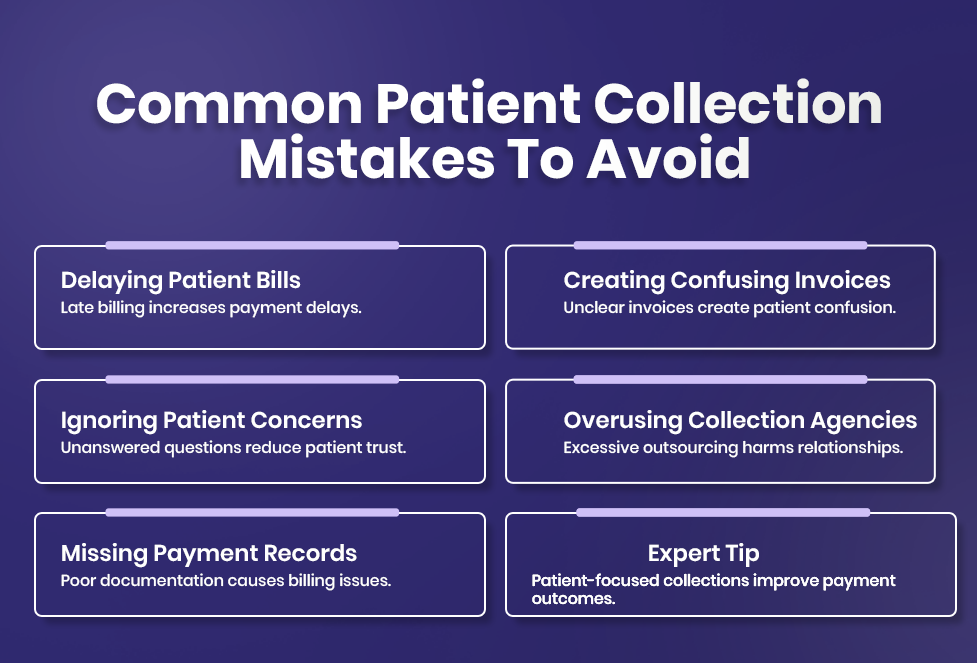
Common Patient Collection Mistakes to Avoid
The key to successful patient collections lies in the right balance between being fiscally responsible and focusing on communication with patients. Billing mistakes will cause delays in payment and will increase the level of dissatisfaction of the patient, which will result in poor revenue cycle performance.
Delaying Patient Bills
Delaying the mailing of patient statements results in higher probabilities of payments being delayed or even becoming aged accounts. It could be possible for the patients to forget about the services rendered or become unreachable. Prompt mailing of bills following processing of claims by the insurance will ensure that collection is easier.
Creating Confusing Invoices
Invoices containing codes and complicated wording can be a barrier for patients in trying to understand what their charges are. It is possible that many billing misunderstandings arise as a result. For this reason, it is better to create detailed and easy-to-understand bills for patients.
Ignoring Patient Concerns
Failure to act on inquiries from patients regarding their bills will affect their trust, as well as the payment process. When a patient fails to understand the billing charges or sees some mistake in the charges, he or she may put off the payment.
Overusing Agencies
Over reliance on external collectors may lead to bad effects on the relationship between the patient and the practice as well as tarnishing its reputation. The decision of engaging external collectors should be made only after the use of all available internal methods of communication have been exhausted.
Missing Payment Records
A lack of proper documentation of the terms of payment, conversations, and installment deals could lead to problems in both personnel and patient understanding. Documentation will help in making sure that follow-through is always constant and there are no misunderstandings in the process of billing.
Expert Tip: Do not make collection errors by focusing on prompt billing, precise invoices, open communication, and accurate documentation. The patient-oriented collection process can help you collect payment without harming your relationship.
Measuring Collection Performance
The monitoring of patient collection performance gives an insight into how financially healthy a healthcare organization is and shows where improvement is possible. For example, patient collection rate, days in patient AR, and collection days give information about financial operations and allow medical establishments to come up with ways to improve their cash flow.
It is also very important to monitor the completion rate of payment plans and patient satisfaction. Although good results in collections will have a positive effect on the finances of a healthcare organization, good patient satisfaction guarantees that the organization will be trusted in the future.
Using Technology to Support Better Collections
The use of technology has changed the way that patient collections happen through increased speed, accuracy, and ease of processing for patients. Advanced billing software helps minimize mistakes, speeds up billing statement creation and delivery, and ensures timely contact. Online payment portals help make billing more convenient by enabling patients to access their balances, pay their bills, and perform other actions anytime.
There are advanced systems such as text-to-pay solutions, revenue cycle analytics, and artificial intelligence that can assist in payment prediction to help improve the methods used in patient collections. With the help of these technologies, providers are able to reduce the accounts receivable and improve payments. AR Management services assist healthcare facilities to lower their aged AR, enhance outstanding balance collection, and improve cash flow. Using effective follow-ups, account monitoring and collection techniques, providers are able to improve patient AR performance without harming their relationship with the patients.
Creating a Financial Experience Patients Appreciate
A positive financial experience is crucial for providing effective healthcare today. The patient’s attitude to billing processes becomes much better when the patient feels respected, well-informed, and assisted. By organizing the patient-centric financial experience, healthcare institutions can not only increase the effectiveness of their collections but also establish trust and satisfaction throughout all stages of interaction with patients.
The empathy shown by the healthcare organization during billing conversations helps employees deal with financial issues professionally and with consideration. By establishing consistent communication through all stages from scheduling to treatment to payment, the healthcare institution makes sure that patients get enough information. Effective billing and assistance create patient loyalty in the long term.
How iSolve RCM support with Payment Collection
iSolve RCM helps healthcare organizations implement proper patient payment collections techniques to recover more money without compromising on the patients’ satisfaction level. By streamlining the billing process, communicating with the patients about their bills, keeping track of the payments, and having the relevant revenue cycle knowledge, iSolve RCM helps reduce the amount of money owed by patients and enhances patient AR performance.
FAQs
What are patient collections in medical billing?
The patient collections process can be described as a system where the health care providers receive payments from their patients for health care services rendered. Such payment processes may include deductions, co-payments, coinsurance, and self-payments. The effective use of collection methods assists the providers in maintaining their cash flow.
How can healthcare providers improve patient collections?
Strategies that healthcare providers can employ to enhance collection include transparency on costs, insurance verification, upfront cost explanation, automated reminders, flexible payment options, and communication skills training for staff members. These methods ensure clarity in understanding costs as well as timely payment.
What is patient financial responsibility?
Financial responsibility of patients is the amount that patients need to pay toward their medical bills after insurance payment. This can include deductibles, copayments, coinsurance, and uncovered charges. Proper explanation of patient financial responsibility is important for avoiding any problems with unexpected medical bills.
Why are patient payment plans effective?
Patient payment programs work well since they help in making health care costs easier through gradual payments. They help in increasing the number of collections, reducing bad debts, offering financial ease, and ensuring that there is steady revenue and good relations with the patients.
How can medical practices reduce patient accounts receivable?
Various medical practices can help reduce AR among patients by issuing statements promptly, watching out for aging reports, pursuing outstanding bills, solving problems relating to claims promptly, and adopting automation in their collections process. Proper communication and billing will help prevent account aging.
What are the best practices for collecting patient balances without affecting patient satisfaction?
These best practices include clear billing, polite communication, flexibility with payments, regular reminders and ease of payment methods. It is important for the healthcare organization to work more on getting the patients to understand what they are supposed to do and not employ hardline approaches.